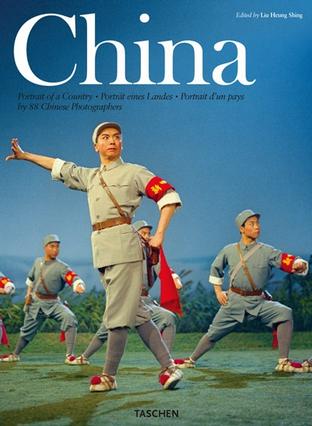
《China, Portrait of a Country》书籍《China, Portrait of a Country》

书刊介绍
内容简介
World, meet China
The People’s Republic seen by 88 Chinese photographers
This book brings together a vast selection of images by Chinese photographers since 1949, giving readers a visual journey across the great People's Republic; edited by esteemed photojournalist Liu Heung Shing, longtime Associated Press correspondent and Time magazine contributor.
In post-Mao China, late Chinese leader Deng Xiaoping urged his one billion countrymen to "seek truth from facts." Taking its cue from Deng's overture, China today is the leading economic story of the 21st century. The process by which China navigated the path from periphery to a central position in world affairs dominates the debate about Asia and China's relationship to the western world. Pulitzer-winning photojournalist Liu Heung Shing charts the visual history of sixty years of the People's Republic (1949 to 2008), and along the way aims to illustrate the humanistic course.
Via work by 88 Chinese photographers, this collection of images shows how the Chinese people have blossomed in spite of enduring previous decades of extraordinary hardship. When China opens the curtain at the summer Olympics in 2008 and the world’s focus falls upon Beijing, these photographs will serve to map out the remarkable road the Chinese have traveled to rejoin the rest of the world. To help place the images in context, also included are a map of China, drafted and prepared by China National Institute of Geography, and a chronology listing all the major political events in China since 1949.
The photographers:
Cai Shangxiong, Chen Jie, Chen Ling, Chen Man, Du Xiuxian, Feng Jianguo, Gu Shoukan, Guo Kai, Han Lei, He Yanguang, Hong Ke, Hou Bo, Hu Yang, Huang Yimin, Ji Lianbo, Jiang Jian, Jiang Shaowu, Jin Alfred Cheng, Lei Yu, Li Lang, Li Nan, Li Zhensheng, Liu Heung Shing, Liu Zheng, Lu Guang, Lu Yuanmin, Luo Xiaoyun, Lu Beifeng, Lü Nan, Lü Xiangyou, Meng Zhaorui, Peng Xiangjie, Qin Wen, Qiu Haiyin, Qiu Yan, Ren Wen, Rong Rong and Inri, Ru Suichu, Shi Xunfeng, Tang Desen, Wang Fuchun, Wang Jie, Wang Jinsong, Wang Shilong, Wang Wenlan, Wei Dezhong, Wei Roxun, Weng Naiqiang, Wu Jialin, Xiao Chuan, Xiao Ye, Xiao Zhuang, Xie Guanfei, Xie Hailong, Xing Danwen, Xu Jingxin, Xu Xiaobing, Yang Shaoming, Yang Shizhong, Yang Yankan, Ying Fukan, Yong He, Yu Deshui, Yu Haibo, Zeng Nian, Zhang Dali, Zhang Peng, Zhang Yaxin, Zhao Cunying, Zheng Pingping, Zhou Cao, Zhou Jiandong, Zhou Yue, Zhu Yan and Zhuang Hui.
About the editor:
Liu Heung Shing’s journalistic involvement with China runs parallel with the development of the People’s Republic. Following the 1979 China-U.S. diplomatic normalization, Liu was Time Magazine’s first photojournalist based in Beijing. His first story was on the death of Mao Zedong. He has worked as a foreign correspondent for the The Associated Press in Beijing (1979-1983), Los Angeles (1983-85), New Delhi (19851-89), Seoul (1989-1990) and Moscow (1990-1993). Liu is the author of China After Mao (Penguin 1982), and USSR: Collapse of an Empire (Associated Press 1992). In 1992 he shared the Pulitzer Prize for Spot News Photography on the coverage of the Soviet Union, and in 2005 French Photo magazine named Liu Heung Shing one of the 100 most influential figures in contemporary photography.
About the contributing authors:
James Kynge is an award-winning former journalist in Asia for 20 years. His book, China Shakes the World, has been translated into 19 languages and selected as Goldman Sachs/Financial Times' Business Book of the Year in 2006.
Karen Smith is an art historian specialising in Chinese contemporary art. She has written widely on the subject and is the author of Nine Lives: The Birth of Avant-Garde Art in New China (Scalo, 2006 / Timezone 8, 2008). She also curates exhibitions, including The Real Thing, Tate Liverpool, 2007, and Chinese Photography and Video, Kunstmuseum Wolfsburg, amongst others. She is also on the advisory board of Three Shadows Photography Art Center in Beijing. She lives in Beijing since 1992
相关推荐
-

五洲寻芳
五洲寻芳 内容简介 本书主要内容包括加东红叶、“西部电影”的外景拍摄胜地——丰碑谷、色彩缤纷的布莱斯峡谷、奥尔梅克文明的大型石雕、挪威的海水倒影、平易近人的壁加...
-
中国历代名著全译丛书(修订版):历代名画记全译(2次)
中国历代名著全译丛书(修订版):历代名画记全译(2次) 内容简介 近代学者余绍宋,编写过一部《书画书录题解》,对前人的书画史论著作了较为系统的研究,结果是对绝大...
-
存天阁谈艺录
存天阁谈艺录 内容简介 本书是刘海粟谈论艺术修养与创造经验的随笔集。全书分为两部分:一是艺文杂谈,二是师友、往事追忆。这些文章虽然多半为兴之所至或触景生情,有感...
-
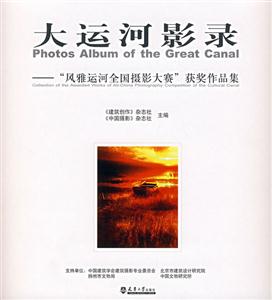
大运河影录
大运河影录 内容简介 保护大运河,首先亟须确定大运河作为人类文化遗产的特质与地位……京杭大运河应该争取成为世界文化遗产,因为这个项目符合新的国际理念和世界遗产申...
-

黄庭坚诗选
《黄庭坚诗选》内容简介:这本诗选是现代著名学者潘伯鹰的著作,作者精选黄诗一百五十余首,加以注释讲解,对黄诗的艺术特色和成就
-
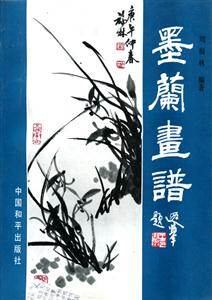
墨兰画谱
墨兰画谱 内容简介 兰、蕙是花卉中的名品,以清逸芬芳惹人喜爱,原生于华南山野溪谷间,伴随春风,香闻十里;自从被移植进入城市之后,成了文人雅士的案几清供,诗人画家...
-
![[日] 大浦猛志《手把手教你数码摄影》](http://oss.shudanhao.com/caiji/chazidian/2023/19230.jpg)
[日] 大浦猛志《手把手教你数码摄影》
随着数码相机的普及,卡片机和单反相机的使用方法成为了大家比较关注的实用热门技巧之一。怎样才能根据拍摄对象和照片的不同要求
-
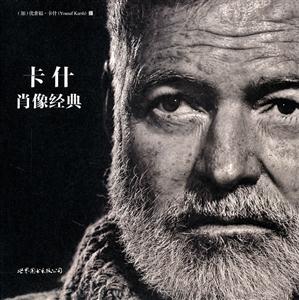
卡什肖像经典
卡什肖像经典 本书特色 优素福·卡什(1908-2002)生活在加拿大的渥太华,他是20世纪*重要的肖像摄影师之一,他考究的构图和用光为那个时代的政治文化名人勾...
-
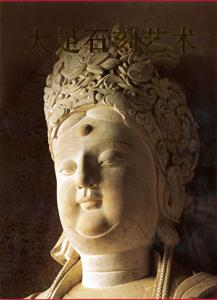
大足石刻艺术
大足石刻艺术 内容简介 大足石刻,始建于唐永徽元年(650年),历经五代,盛于两宋,余绪延至明、清,是中国晚期石窟艺术的代表作品。大足石刻,是重庆市大足县境内主...
-
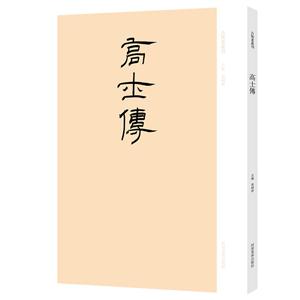
高士传
高士传 本书特色 《高士传》由清代画家任熊绘,蔡照初刻。绘者年仅三十五岁即去世,此系绘于咸丰七年(1857),是其一生*后之作。据光绪三年(1877)沙家英翻版...
-
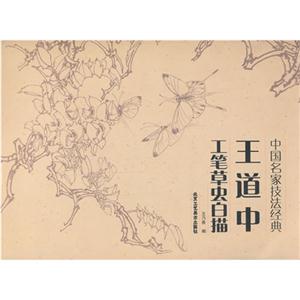
王道中工笔草虫白描-中国名家技法经典
王道中工笔草虫白描-中国名家技法经典 本书特色 王乃青编著的《王道中工笔草虫白描(中国名家技法经典)》从什么叫白描、怎样进行白描以及怎样勾线才有力等方面进行了阐...
-
宋朝绝对很有趣
《宋朝绝对很有趣》内容简介:历史不是冷冰冰的。看似由时间、地点和一连串数据组成的历史事件,背后的主角是一个个活生生的人,有
-
认识绘画:丰子恺绘画十六讲
丰子恺艺术启蒙系列:正如钱锺书先生在《围城》中所言,“教授成为名教授,有两个阶段:第一,讲义当著作;第二,著作当讲义”,丰子恺先生的教学和创作生涯亦是如此。从1...
-
历代名画录:第二辑:白描经典
历代名画录:第二辑:白描经典 本书特色 白描是源于壁画的“白画”或“粉本”,以*单纯的方式呈现*丰富的意象。该书...
-
![[美] 玛丽·华纳·玛瑞恩《100个改变摄影的伟大观念》](http://oss.shudanhao.com/caiji/chazidian/2023/19124.jpg)
[美] 玛丽·华纳·玛瑞恩《100个改变摄影的伟大观念》
《100个改变摄影的伟大观念》是一部引人入胜的简明摄影文化史,记载了从19世纪早期发明的达盖尔银版摄影法到现如今数字摄影的革命
-
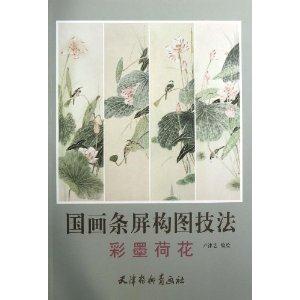
彩墨荷花-国画条屏构图技法
彩墨荷花-国画条屏构图技法 本书特色 《国画条屏构图技法(彩墨荷花)》编著者卢津艺。卢津艺的善于用色还有“以墨立骨,以色生韵”的特点,这体现在他的“没骨”花鸟画...
-

新零售,变了
《新零售,变了》内容简介:关注受线上、线下冲击,仍然高速增长的企业,提供24种可复制的获利模式:虚实交融、打破边界、连锁不复
-
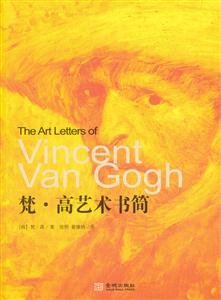
梵·高艺术书简
梵·高艺术书简 本书特色 文森特·梵·高(vincent vangogh,1853—1890),地球上*孤寂的灵魂之一。世上并没有一个可以与他分享快乐...
-

历代名家册页:潘天寿
历代名家册页:潘天寿 本书特色 历代名家册页 潘天寿共收录56幅潘天寿各个时期的优秀画作,其中48幅为册页,8幅为扇面作品。潘天寿册页共有三大特点:一是笔精墨妙...
-
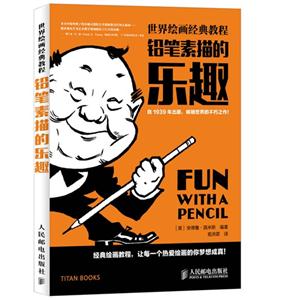
铅笔素描的乐趣
铅笔素描的乐趣 本书特色 《世界绘画经典教程——铅笔素描的乐趣》是美国著名插画家安德鲁?路米斯的经典著作,已经在世界各地畅销60多年。全书用幽默易懂的语言,将一...